
6 Telling Signs That Perimenopause Has Started
Share It!
Maybe your period comes earlier than expected. Then, the next month, it is late. You wake at 3 a.m., your breasts feel tender, and your mood seems harder to predict. You may start wondering, “Is this PMS, or is something changing?”
It could be perimenopause.
Before menopause, women go through a transition called perimenopause. During this stage, the ovaries become less predictable, ovulation changes, and hormones such as estrogen and progesterone fluctuate1. It commonly begins during the 40s, but there is no single age or clearly defined moment when it starts. Every woman can experience it differently.
For Black women, there are also reasons to pay closer attention to the differences.
Research from the Study of Women’s Health Across the Nation (SWAN) found that Black women had a median final menstrual period 8.5 months earlier than White women in one longitudinal analysis 2. A separate SWAN study found that African American women had a longer menopausal transition than White women, particularly when the transition began at a younger age 3. Research from the Black Women’s Health Study has also examined factors associated with the timing of natural menopause specifically among African American women8.
Symptoms can differ, too. Black women have reported more frequent and bothersome hot flashes and night sweats than White women2 9 10. In SWAN, African American women had the longest total duration of frequent vasomotor symptoms, with a median of 10.1 years 4 . These symptoms can also affect sleep and daily wellbeing1 6.
So, what might you actually notice?
Six changes that may be telling you something
- Your periods become irregular
A cycle that was once predictable may suddenly be harder to anticipate. Your period might arrive earlier, later or at a different interval. Changes in menstrual patterns are an important sign of the menopausal transition 1.
- Your flow becomes heavier or lighter
One month may bring unusually heavy bleeding, while another is much lighter. Changes in menstrual bleeding can occur as ovulation and hormone patterns become less predictable5.
- You notice new weight or body changes
You may notice weight gain or changes in where your body stores fat. These changes can happen during midlife, but weight changes have many possible causes and should not automatically be blamed on perimenopause. Research involving African American women also identifies weight and metabolic health as part of the broader midlife experience 2 6.
- Your breasts suddenly feel tender
Breast tenderness can feel a lot like PMS. Hormonal fluctuations may make familiar symptoms stronger or cause them to appear at unexpected times 5. In a recent survey of African American women experiencing menopause symptoms, breast tenderness was among the symptoms reported by participants10.
- Your sleep and waking pattern changes
Perhaps you fall asleep normally but wake several times during the night. You may also start waking much earlier than usual. Sleep problems are an important part of the menopause experience, and research has specifically examined sleep among midlife African American women6 7.
- Your mood shifts feel stronger
You may notice more irritability, anxiety, low mood or emotional ups and downs. African American women describe psychological and emotional changes as part of their menopause experiences, although mood changes can also have other causes2 7.
Dr. Jerilynn Prior, in Clearing Confusion about Perimenopause, notes that a midlife woman experiencing three or more new changes may be entering the transition5.
Don’t assume every new symptom is perimenopause
Perimenopause can look a lot like PMS, but similar symptoms can occur with other health conditions. New, persistent or unusual changes in wellbeing should be medically evaluated rather than automatically attributed to changing hormones. Particularly heavy bleeding, significant mood changes or unusual breast changes deserve professional attention.
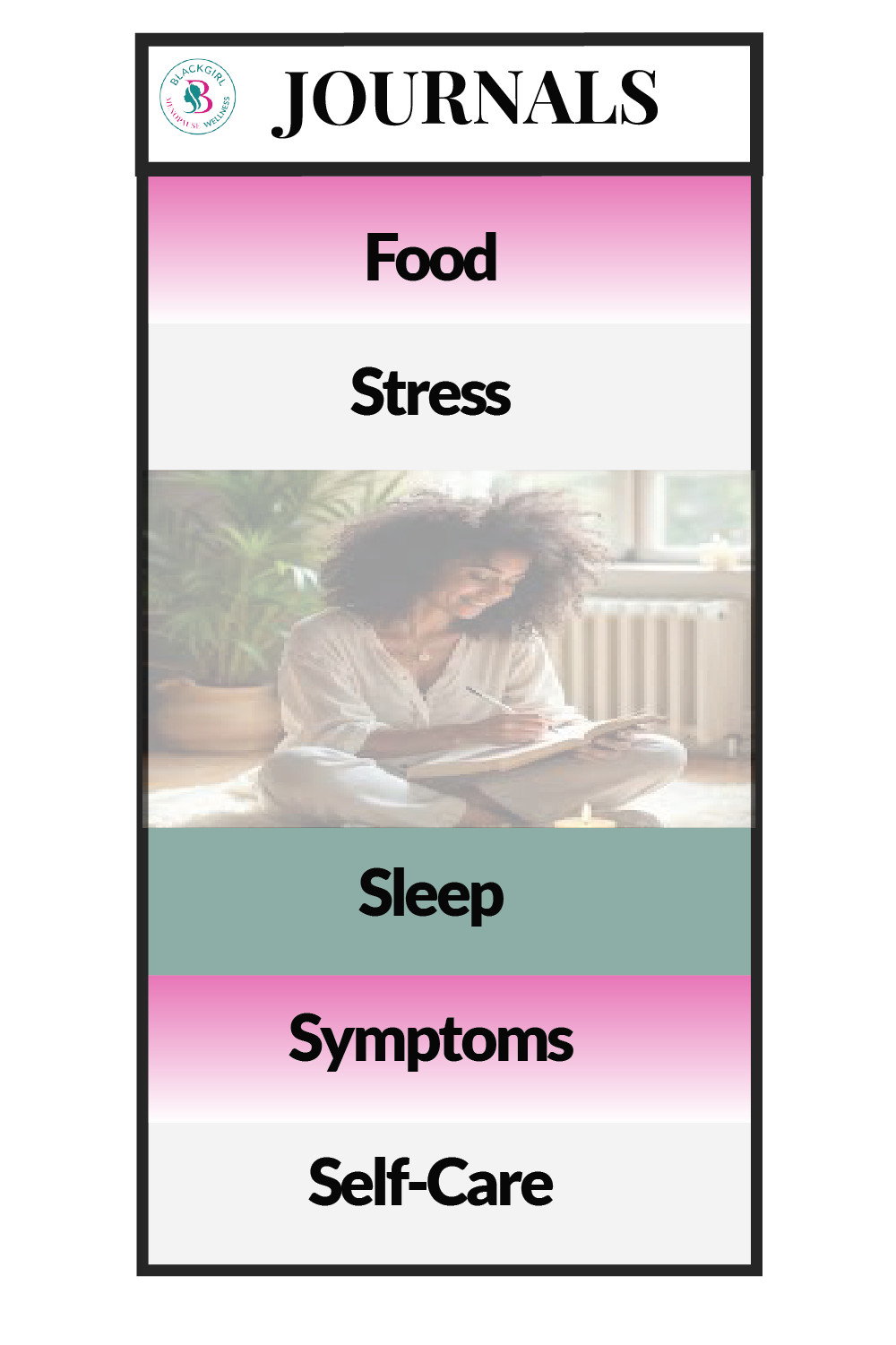
You might be interested in the following.
Done for you, tracker.
Perimenopause Symptoms & Triggers DIGITAL Tracker: Build Awareness and Agency
Knowledge is empowering. Keeping tabs on the type, frequency, and severity of your symptoms, and when they occur, can help you know what is normal and what isn’t, plus this information is important to share with your health practitioner for additional guidance. Click on the link below and get your copy of the Perimenopause Symptoms and Triggers Digital Tracker today.
With love and health,
Charmaine
Disclaimer
The information presented here is for informational and educational purposes only and is not intended to be used as medical advice. Any statements or claims about the possible health benefits conferred by any products or lifestyle changes have not been evaluated by medical professionals or the Food & Drug Administration and are not intended to diagnose, treat, cure, or prevent any disease. You should consult your health practitioner before changing your diet, taking supplements, or starting any exercise or health program.
References
- El Khoudary SR, Greendale G, Crawford SL, et al. The menopause transition and women’s health at midlife: a progress report from the Study of Women’s Health Across the Nation (SWAN). Menopause. 2019;26(10):1213-1227.
https://pubmed.ncbi.nlm.nih.gov/31568098/ - Harlow SD, Burnett-Bowie SM, Greendale GA, et al. Disparities in Reproductive Aging and Midlife Health between Black and White women: The Study of Women’s Health Across the Nation (SWAN). Women’s Midlife Health. 2022;8:3.
https://pmc.ncbi.nlm.nih.gov/articles/PMC8822825/ - Paramsothy P, Harlow SD, Nan B, et al. Duration of the menopausal transition is longer in women with young age at onset: the multiethnic Study of Women’s Health Across the Nation. Menopause. 2017;24(2):142-149.
https://pubmed.ncbi.nlm.nih.gov/27676632/ - Thurston RC, Joffe H. Duration of menopausal vasomotor symptoms over the menopause transition. JAMA Internal Medicine. 2015;175(4):531-539.
https://pubmed.ncbi.nlm.nih.gov/25686030 - Prior JC. Clearing Confusion about Perimenopause. British Columbia Medical Journal. 2005;47(10):538-542.
https://bcmj.org/articles/clearing-confusion-about-perimenopause - Lee S, Watson-Singleton N, Saban K, Janusek L. Development of a culturally tailored sleep intervention for midlife African American women: A scoping review. Sleep Medicine. 2025;132:106565.
https://pubmed.ncbi.nlm.nih.gov/40381602/ - Aririguzo C, Spencer BS, Freysteinson W. “You’re acting womanish!” A qualitative descriptive study of the experiences of African American women in menopausal transition. Journal of Women & Aging. 2022;34(2):258-275.
https://pubmed.ncbi.nlm.nih.gov/34024266/ - Palmer JR, Rosenberg L, Wise LA, Horton NJ, Adams-Campbell LL. Onset of natural menopause in African American women. American Journal of Public Health. 2003;93(2):299-306.
https://pmc.ncbi.nlm.nih.gov/articles/PMC1447734/ - Grisso JA, Freeman EW, Maurin E, Garcia-Espana B, Berlin JA. Racial differences in menopause information and the experience of hot flashes. Journal of General Internal Medicine. 1999;14(2):98-103.
https://pubmed.ncbi.nlm.nih.gov/10051780/ - Sappington A, et al. Ethnicity and vasomotor symptoms in postmenopausal women. Journal of Women’s Health. 2007.
https://pubmed.ncbi.nlm.nih.gov/17937565/
Share It!
Related Posts

Hey there,
Charmaine here



Follow Me