
Why Estrogen Dominance Manifests in Perimenopause and Makes it Difficult
Share It!
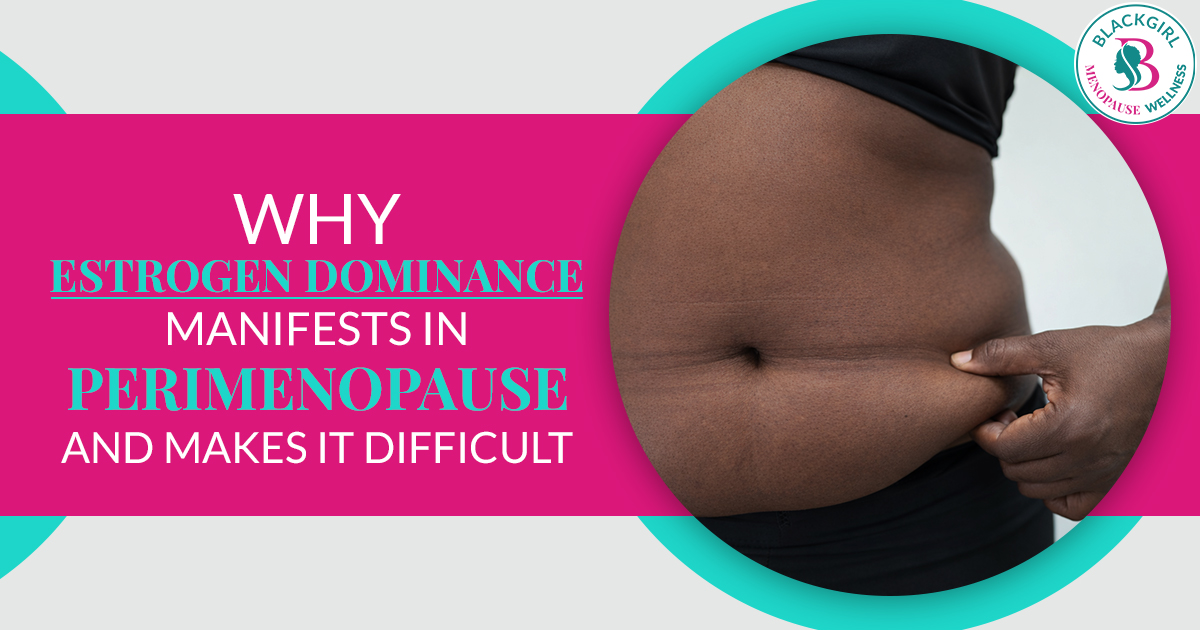
You know something is off. Then you feel it. A new level of tiredness, heavier periods, swollen breasts, noticeable weight gain, mood swings, insomnia, and anxiety.
For us black women, perimenopause is often a very difficult time, something I know first-hand. What we are often told it is all due to estrogen declining — a simple story. A blanket response for a very personalized experience. Over time, it becomes the explanation we carry. Yet this is not the full truth according to new research.
It Isn’t Declining Estrogen — It’s Often Rising in Perimenopause
For decades, menopause has been framed as a season of decline. The body is said to produce less estrogen, and this decline is cited as the explanation for hot flashes, night sweats, irregular periods, mood changes, and shifts in energy levels.
You may have sensed a gap between the story and your lived experience, especially if you are in early stage of perimenopause. Symptoms can feel intense, layered, and sometimes overwhelming. The body may feel overstimulated rather than depleted. Emotions may feel heightened. Menstrual cycles may feel chaotic.
Research is offering a new perspective. Rather than moving steadily downward, estrogen fluctuates. Levels rise and fall unevenly across cycles, and average estrogen levels during perimenopause can run higher than in earlier reproductive years¹ ². It’s counterpart, progesterone sharply declines.
This state is often described as estrogen dominance. It reflects an imbalance in hormonal ratios, with estrogen levels outweighing progesterone.
Understanding why this state occurs, and the signs to look for, can help explain why perimenopause symptoms feel intense, frequent, and confusing.
Estrogen Dominance: Why it occurs and Signs to Look For
Two common contributing factors to estrogen dominance is lifestyle and environmental chemicals. Consuming processed or non-organic foods grown with pesticides or using products containing environmental chemicals, as they contain xenoestrogens that mimic, increase, and decrease the natural estrogen in the body.
The signs commonly associated with estrogen dominance overlap closely with perimenopause and menopause symptoms³.
Signs of Estrogen Dominance
- Mood Swings
- Irritability
- Anxiety
- Sleep Disruption
- Breast Tenderness
- Bloating
- Weight Gain
- Brain Fog
- Hot Flashes
- Fatigue
Hormones do not just flow in the body. The body must process, transform, and clear them, especially estrogen, as too much can have a significant impact on the body that goes beyond discomfort, but serious health issues such as cancers.
Estrogen Processing & Eliminating Systems
Every day, the body produces estrogen, uses it, then breaks it down in the liver and eliminates the excess through the gut and kidneys.
The Liver Role: Estrogen is primarily metabolized in the liver, where it undergoes a two-step detoxification process. The metabolites then move to the gut and kidneys, where additional processes occur, either for elimination via the urine or for reabsorption.
The liver performs this work quietly. It does not send pain signals or prominent warnings when burdened. Its role often goes unnoticed until the effects appear elsewhere.
Many factors influence how efficiently the liver processes estrogen. Chronic stress, nutrient deficiencies, alcohol intake, medications, and environmental toxins can all add to its workload. Over time, clearance may slow.
This does not mean the body has failed. It means the system is under strain.
The Gut’s Role: Once the liver processes estrogen, it travels through the gut. Here, a specific group of gut microbes, known as the estrobolome, plays a key role in regulating the amount of estrogen excreted and reabsorbed.
A balanced estrobolome supports healthy estrogen metabolism. When this microbial community shifts, estrogen may be recycled back into circulation rather than eliminated².
Modern life places unique pressure on gut health. Antibiotics, chlorinated water, refined sugar, processed foods, and common medications all influence the gut environment. Stress alters digestion and microbial balance. Over time, these influences shape how hormones behave.
The gut does not operate in isolation. It acts as a bridge between internal biology and the external environment. Its role in hormone balance is both powerful and often overlooked.
The good news is that you can restore balance and support the elimination process.
Eliminating Estrogen Dominance Through Daily Choices
1. Support the Detoxification Pathway
The liver relies on specific nutrients to support estrogen metabolization, and the kidneys rely heavily on hydration to remove excess estrogen.
What Helps:
- Cruciferous vegetables such as broccoli, cauliflower, kale, and Brussels sprouts contain indole-3-carbinol, which supports estrogen breakdown.
- Fiber: Fiber helps remove excess estrogen from the gut for elimination through the bowels.
- Water: Drink adequate water to support kidney functions and the excretion of excess estrogen
- Honorable mentions: Foods rich in antioxidants, including berries, turmeric, and green tea, support overall cellular health and reduce oxidative stress.
What Doesn’t: Alcohol and caffeine add to the liver’s workload and influence hormone balance when consumed frequently.
These choices work best when approached gently and consistently. Small shifts repeated over time shape long-term balance.
2. Nourish the Estrobolome
A healthy gut microbiome is central to establishing healthy estrogen levels.
What Helps: Fermented foods have supported digestion across cultures for generations. Sauerkraut, kimchi, cultured vegetables, yogurt, kefir, miso, and kombucha introduce beneficial microbes that support microbial diversity.
Prebiotic foods such as garlic, onions, leeks, asparagus, artichokes, and dandelion greens nourish existing gut bacteria.
Together, these foods help create an environment where estrogen metabolism flows more smoothly.
3. Reduce Environmental Load
Take the time to assess what you take into the body by way of the quality of your foods, as well as the quality of the products you use either on your skin or in your home, as many contain ‘fake’ estrogen that impacts your natural estrogen function and balance.
What Helps: Reading labels not just on your foods but also on your personal care and cleaning products; if you cannot easily say the name, it’s more than likely an environmental chemical that contains ‘fake’ estrogen; choosing glass over plastic; and paying attention to household and personal care products all contribute to reduced exposure.
The word “fragrance” often signals the presence of phthalates. Making simple swaps over time reduces cumulative exposure and supports hormonal balance.
Reducing estrogen dominance work best by keeping track of your symptoms, the changes you make and how you feel.
Perimenopause Signals A New Way Forward
Perimenopause shouldn’t be a time of suffering; it has to be a time when you empower yourself about your changing body and renew your lifestyle to support your changing wellbeing needs, as oftentimes many discomforts lie in the disconnection of both.
When you know this, the transition feels manageable. The body feels understandable, and changes lead to a healthier and more confident you.

Empower Yourself and Transform Your Menopause Experience
Explore the Blackgirl Menopause Wellness Resources, where you will find a wealth of tools to help you: evidence-based eBooks, personalized coaching, insightful journals, and inspiring live presentations, all to empower you. Plus, explore our carefully curated marketplace for menopause products. Click on the link today to begin your transformative journey!
With love and health,
Charmaine
Disclaimer
The information presented here is for informational and educational purposes only and is not intended to be used as medical advice. Any statements or claims about the possible health benefits conferred by any products or lifestyle changes have not been evaluated by medical professionals or the Food & Drug Administration and are not intended to diagnose, treat, cure, or prevent any disease. You should consult your health practitioner before changing your diet, taking supplements, or starting any exercise or health program.
References
- Clearing Confusion About Perimenopause. British Columbia Medical Journal.
https://bcmj.org/sites/default/files/BCMJ%20_47_Vol10_Clearing_Confusion_Perimenopause.pdf - Role of the gut microbiome in estrogen metabolism and regulation. PubMed.
https://pubmed.ncbi.nlm.nih.gov/29573619/ - Endocrine-disrupting chemicals and their effects on female health. Human Reproduction Update.
https://academic.oup.com/humupd/article-abstract/13/6/559/682984 - Environmental estrogens and hormone imbalance. PubMed.
https://pubmed.ncbi.nlm.nih.gov/19250192/



Follow Me