
Three Ways Perimenopause Can Be Mistaken for Something Else
Share It!
You can easily get misdiagnosed in menopause, especially at the onset, as perimenopause, where your bloating becomes IBS. Your mood swings become depression. You have chronic fatigue. You are told everything but transitioning into menopause.
I remember that moment well. When my symptoms first appeared, I did not know much about perimenopause and was looking to my doctors for answers thinking I was sick. First, he called it stress. Later, anxiety. Then gut imbalance. Each label sounded reasonable on its own. Together, they led me down a path of unnecessary testing and expenses and further from relief. Without the right support, my health declined, my world narrowed, and eventually I reached a breaking point that forced me to stop working.
At the time, I thought the problem was me. Years later, what I had suspected became clear: my doctor was not qualified to address this non-medical biological change. Here’s what I mean by this.
Many Women Seek Answers but Doctors Aren’t Trained
Perimenopause does not arrive with a clear announcement. The body isn’t compartmentalizing; it’s all connected. Estrogen and progesterone influence mood, sleep, digestion, temperature regulation, and energy levels. When they shift, symptoms appear across many areas at once¹.
Modern medicine works best when symptoms can be tested in a lab and produce an answer. Perimenopause does not do that, as it is not a medical condition. It is a natural biological change in who you are and how you function. It transforms you mentally, physically, and emotionally and crosses all systems of the body, often mimicking medical conditions. Mood changes can resemble depression. Digestive changes can resemble IBS. Deep exhaustion can resemble chronic fatigue. Each resemblance makes sense on its own. Together, they create a pattern that needs qualified eyes.
To be an advocate for your own well-being, especially at the onset of menopause — perimenopause — it helps to understand how low mood can be labeled as clinical depression, bloating as IBS, and low energy as chronic fatigue, all of which are medical conditions that may overlook hormonal shifts as the underlying drivers.
1. When Low Mood Boxed into Clinical Depression
Your emotional instability might push you to find answers. Mood changes feels like a roller coaster. Anxiety appears suddenly. Sadness lingers. Irritability feels sharper than before. These experiences feel real and heavy and you want clarity not guess work.
Estrogen and progesterone influence serotonin, a chemical messenger closely tied to mood and emotional balance². During perimenopause, fluctuating hormone levels lead to fluctuating serotonin levels, which can create intense emotional shifts. Large studies show that symptoms of depression appear in about 18 percent of women in early perimenopause and rise to around 38 percent in later stages³. For Black women these symptoms often manifest more intensely.
Because these symptoms mimic clinical depression, many women receive that diagnosis. Antidepressants often become the first treatment offered by doctors often without taking into account the hormonal shifts. There is another layer worth knowing. If you have had a history of depression prior to perimenopause hormonal changes can amplify an existing vulnerability, making symptoms feel stronger and harder to manage⁴. In these cases, emotional health and hormonal health move together, each shaping the other.
What Helps: Mood changes during perimenopause deserve thoughtful care that considers the whole person. Hormones, mental health history, lifestyle, trauma, and life stress all matter. Depressive symptoms require support that is going to help you feel most grounded, and in perimenopause research shows a that hormone replacement can be helpful9. Combining this with therapy along with lifestyle changes, can only lead to more benefits.
2. Your Bloating Becomes the Unexplained Gut Malady – IBS
You might have more noticeable digestive symptoms in perimenopause and think you have a digestive condition. Bloating becomes frequent. Constipation appears. Foods once tolerated begin to cause discomfort. Your general practitioner might refer you to a gastroenterologist. When tests reveal little, the label often becomes irritable bowel syndrome, IBS, and often without taking into account the perimenopause impact.
Reproductive hormones play a steady role in digestion. Estrogen and progesterone help regulate how food moves through the digestive tract and how sensitive the gut becomes⁵. As hormone levels fluctuate during perimenopause, the gut-brain communication can slow down throwing off the gut balance. These changes feel physical, mental and emotional.
I learned this connection through experience. During my own transition, my minor gut issues became worse. I was going to a gastroenterologist for answers, who didn’t have any. At the same time, I was also dealing with mood swings and hot flashes. By tracking my symptoms and diet and making changes, my digestive health improved, my hot flashes and night sweats softened, and my mood improved as well. It felt like two conversations happening at once, linked in ways I had never expected.
Research supports this connection. Gut health and hormone balance influence each other. When digestion struggles, inflammation and stress responses can intensify perimenopausal symptoms. When hormones fluctuate, gut symptoms can grow louder⁶.
If you aren’t getting clear answers about your digestive issues, that’s because perimenopause rearranges your biology. Sometimes you have to do what you have not done before, which is take a stack of what you are consuming and how you are living.
What Helps: Tracking your food intake. Reducing stress. Making smart nutritional choices and boosting digestion.
3. Low Energy that Becomes Chronic Fatigue
Then there is fatigue that happens in perimenopause. This is not ordinary tiredness. It settles deep and stays. Sleep may feel broken or unrefreshing. Brain fog clouds simple tasks. Dizziness and headaches join the picture. Energy feels borrowed and limited.
These symptoms overlap closely with chronic fatigue syndrome⁷. You might be looking for answers and get boxed into this medical condition.
Both experiences include exhaustion, cognitive changes, sleep disturbance, and digestive issues. The difference often lies in cause and course. Perimenopausal fatigue follows hormonal patterns and often changes as hormone balance improves. Chronic fatigue syndrome follows a different biological pathway and requires its own specialized care.
Confusion can happen in both directions. Some women receive a fatigue diagnosis when hormonal support could ease symptoms. Others hear perimenopause mentioned quickly when another condition deserves deeper investigation.
What Helps: Skilled practitioners who will take the time and care to look at age, timing, symptom patterns, medical history, and testing to understand what the body is communicating.
Finding Your Way Forward
One of the quiet truths of perimenopause is that the body often offers clues early—your age. Periods change in rhythm or flow. Sleep becomes lighter. Moods shift more easily. Temperature regulation feels less predictable. Seen together, these signals form a story. The body is moving into a new stage of life ⁸.
The other truth is these symptoms do mimic health issues, which is why finding the right practitioner in perimenopause is helpful. Always check doctors’ credentials to ensure they are a menopause specialist, not just a medical doctor. Shortcuts in diagnosis can pull understanding in either direction. Hormones can be overlooked or used as an explanation for everything. Perimenopause care falls in the middle: it is not a sickness, but it also warrants clarity. Collaboration between you and your practitioner becomes the foundation of adequate care.
Always remember you live inside your body. Your observations matter. If you feel your issues are not taken seriously find another doctor.
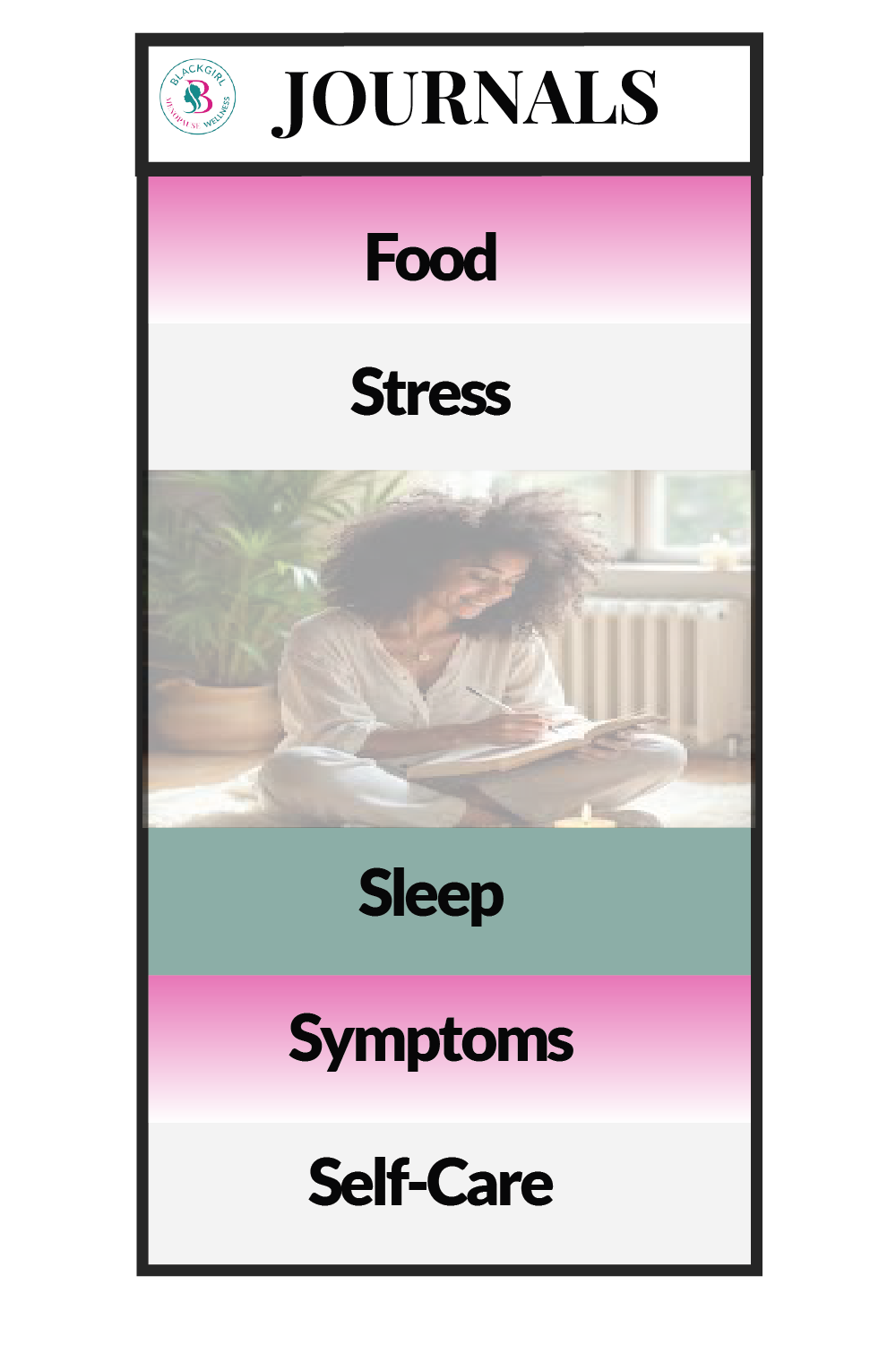
Done for you, tracker.
Perimenopause Symptoms & Triggers DIGITAL Tracker: Build Awareness and Agency
Knowledge is empowering. Keeping tabs on the type, frequency, and severity of your symptoms, and when they occur, can help you know what is normal and what isn’t, plus this information is important to share with your health practitioner for additional guidance. Click on the link below and get your copy of the Perimenopause Symptoms and Triggers Digital Tracker today.
With love and health,
Charmaine
Disclaimer
The information presented here is for informational and educational purposes only and is not intended to be used as medical advice. Any statements or claims about the possible health benefits conferred by any products or lifestyle changes have not been evaluated by medical professionals or the Food & Drug Administration and are not intended to diagnose, treat, cure, or prevent any disease. You should consult your health practitioner before changing your diet, taking supplements, or starting any exercise or health program.
References
- Prior, J. C. Clearing confusion about perimenopause. British Columbia Medical Journal, 2005. https://bcmj.org/articles/clearing-confusion-about-perimenopause
- Bromberger, J. T., & Kravitz, H. M. Mood and menopause: Findings from the Study of Women’s Health Across the Nation (SWAN). Obstetrics and Gynecology Clinics of North America, 2011. https://pmc.ncbi.nlm.nih.gov/articles/PMC3197240/
- BioTE Medical. Perimenopause Survey Whitepaper. BioTE, 2025. https://biote.com/wp-content/uploads/2025/11/Biote-Perimenopause-Survey-Whitepaper.pdf
- Bromberger, J. T., et al. Depressive disorders during the menopausal transition. Journal of Affective Disorders, 2011. https://pmc.ncbi.nlm.nih.gov/articles/PMC8166071/
- Maki, P. M., et al. Hormone therapy and gastrointestinal function. Menopause, 2020. https://pmc.ncbi.nlm.nih.gov/articles/PMC10469514/
- Tetel, M. J., et al. Hormones, the gut, and inflammation. Endocrine Reviews, 2018.
- Institute of Medicine. Beyond Myalgic Encephalomyelitis/Chronic Fatigue Syndrome. National Academies Press, 2015.
- North American Menopause Society. Perimenopause overview and symptom patterns. NAMS, 2023.
- Gordon JL, Rubinow DR, Eisenlohr-Moul TA, Xia K, Schmidt PJ, Girdler SS. Efficacy of Transdermal Estradiol and Micronized Progesterone in the Prevention of Depressive Symptoms in the Menopause Transition: A Randomized Clinical Trial. JAMA Psychiatry. 2018;75(2):149–157. doi:10.1001/jamapsychiatry.2017.3998
Share It!
Related Posts
Hey there,
Charmaine here




Follow Me